How Dental Crowns Help Save Teeth That Might Otherwise Be Lost
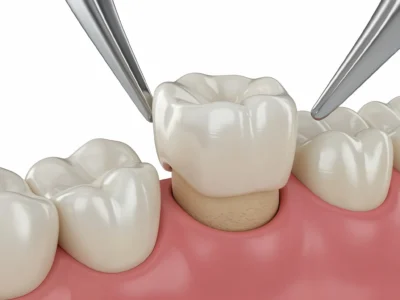

A tooth does Dental Crowns not have to be completely broken, infected, or missing to be in serious trouble. Many teeth reach a point where they are still technically present, but too weak to carry chewing pressure safely. That is often the stage where people hear the word "crown" for the first time. For some, it sounds like a cosmetic upgrade. In practice, Dental Crowns are usually far more important than that. They are often the piece that keeps a damaged tooth working for years instead of months.
Dentists recommend crowns for many different reasons, but the central idea is simple. When a tooth has lost too much strength or structure, a filling alone may no longer be enough. A crown covers and reinforces what remains, helping the tooth function again without splitting apart. In many cases, that is what stands between saving the tooth and extracting it.
The value of a crown becomes clearer when you understand what a weakened tooth is actually dealing with every day. Chewing is not a gentle process. Back teeth absorb significant force, especially in patients who clench or grind. Even a small crack can deepen over time. A large filling can act like a wedge inside the tooth. A root canal treated tooth may no longer hurt, but it can still be brittle. Teeth do not usually fail all at once. They fail in stages, and crowns are often used to stop that progression before the final stage arrives.
When a tooth is present but no longer secure
One of the most common misunderstandings in dentistry is the belief that if a tooth is not hurting, it must be fine. That is not always true. Teeth can be compromised in ways that are silent until something gives way. A molar with a large old filling may have thin remaining walls. A premolar may have a crack that opens slightly under pressure. A front tooth may have been fractured and rebuilt several times. Structurally, these teeth are vulnerable even if they look acceptable in the mirror.
That vulnerability matters because teeth live under repeated stress. Think about the number of times a person bites, chews, clenches, swallows, and shifts pressure over the course of a day. Small weaknesses become important under repetition. In clinical practice, it is common to see a tooth that "was fine last week" arrive with a cusp broken off, or with pain that began after biting into a crusty piece of bread, a nut, or a hard candy.
A crown changes the load pattern on a damaged tooth. Rather than asking one weakened wall or one repaired corner to absorb the force, the crown splints the remaining tooth together and distributes pressure more evenly. That mechanical support is often the difference between a repairable tooth and a tooth that fractures below the gumline, where saving it becomes much more difficult.
What a crown actually does
A crown is a custom-made cover that fits over a prepared tooth. It restores shape, strength, and function, and in many cases it improves appearance too. The idea is not to hide a problem but to protect a tooth that has already lost enough structure that it needs reinforcement.
In a healthy natural tooth, enamel forms a strong outer shell. Once decay, fracture, wear, or previous dental work remove too much of that shell, the remaining tooth can flex in ways it was never designed to. Crowns recreate a protective outer form. They do not make a damaged tooth identical to a natural untouched tooth, but they can return a great deal of stability.
Materials vary. Porcelain and ceramic crowns can blend beautifully with natural teeth, especially in visible areas. Porcelain fused to metal can provide durability with acceptable esthetics. Gold and other metal alloys are still excellent functional materials in certain back teeth, particularly where biting forces are heavy and space is limited. The best option depends on the location of the tooth, the bite, esthetic expectations, and the amount of healthy tooth left.
The situations where crowns often prevent tooth loss
There is no single type of "crown tooth." Some need crowns after decay, some after trauma, some after years of gradual wear. Certain patterns show up again and again in practice.
- A tooth has a very large filling, and the remaining walls are thin or cracked.
- A tooth has had root canal treatment and needs protection from fracture.
- A tooth has broken, but the break does not extend so deep that the tooth is hopeless.
- A tooth is badly worn from grinding, acid erosion, or years of heavy function.
- A tooth supports a bridge or anchors part of a larger restoration plan.
These situations differ, but they share a common theme. The tooth is still potentially useful, yet it needs more than a patch. A crown gives the dentist a way to preserve what remains rather than giving up on the tooth entirely.
Why root canal treated teeth are frequent candidates
People often assume the root canal is the hard part and the crown is optional. For many back teeth, that is not a safe assumption. A root canal removes infected or inflamed tissue from inside the tooth, cleans the canals, and seals them. That resolves pain and infection, but it does not restore external strength. In fact, the tooth may now have even less structural integrity than before because decay, old fillings, and access openings have already removed some of the supporting tooth.
Molars and premolars are especially vulnerable after root canal treatment because they handle heavier chewing loads. Without coverage, they can crack months or even years later. Sometimes the patient returns after a successful root canal saying the tooth felt fine until a piece suddenly broke off during a meal. If the fracture line is favorable, the tooth can still be crowned and saved. If it travels too deep, extraction may be the only remaining option.
Front teeth are a more nuanced case. Not every root canal treated front tooth needs a full crown immediately. If the remaining structure is strong and the bite is favorable, another type of restoration may sometimes work. That judgment depends on the tooth, not a one-size-fits-all rule. This is one reason a good treatment plan is more than a menu of procedures. It requires evaluating how the specific tooth functions in the mouth.
Large fillings do not last forever
One of the most common paths toward a crown starts with a filling that was done years earlier. Fillings are valuable, conservative treatments, but they have limits. As a filling gets larger, the amount of natural tooth supporting it gets smaller. A modest cavity on the side of a tooth is one thing. A tooth that has lost most of its chewing surface and both side walls is another.
A big filling can keep a tooth serviceable for quite a while, sometimes many years. But over time, several things can happen. The filling may leak at the edges. The bond may weaken. Decay may recur around the margins. The remaining cusps may flex under pressure and begin to crack. At that point, simply replacing the filling with another large filling may not solve the underlying structural problem. In some teeth, it actually sets up the same cycle again.
This is often where patients feel caught off guard. They are told that the old filling has failed and a crown is now the better option. It can sound like escalation, but often it is really recognition that the tooth has crossed a threshold. The goal is no longer just to fill a space. The goal is to keep the tooth from breaking beyond repair.
Cracks are where timing matters most
Cracked teeth can be tricky. Symptoms are not always dramatic. Some patients describe a sharp zing when they release their bite. Others notice pain only on certain foods, or a vague ache that seems to come and go. A crack may be visible, but not always. Sometimes the diagnosis comes from a combination of symptoms, exam findings, and the tooth's history.
A crown can be one of the best tools for a cracked tooth because it holds the tooth together externally. If the crack has not reached the pulp or extended too far down the root, a crown may stabilize the tooth and allow comfortable function. If the pulp is already inflamed or infected, root canal treatment may be needed first, followed by a crown.
The difficult part is that cracks exist on a spectrum. Some are very manageable. Some are not. Once a crack extends vertically through the root, the prognosis drops sharply. That is why delay matters. A tooth with a manageable crack today may become a split tooth later. Dentists are not trying to be dramatic when they recommend treatment promptly in these cases. They have seen how fast a borderline tooth can become unsalvageable.
The crown process, and why precision matters
A crown is only as good as its fit, design, and the tooth preparation beneath it. The process usually starts with removing decay, old restorative material, and any unsupported tooth structure. The dentist reshapes the tooth so the final crown can seat properly and still have enough thickness to be strong. An impression or digital scan captures the details, and a dental laboratory or milling system fabricates the crown. A temporary crown is often placed while the final one is made.
When the permanent crown returns, fit is checked at the margins, where the crown meets the tooth, and at the contact points with neighboring teeth. The bite must be adjusted so the tooth carries force appropriately. This part is not cosmetic fine-tuning. Bite discrepancies can overload a crown, irritate the ligament around the tooth, and contribute to discomfort or failure.
Good crowns often feel unremarkable once they settle in. That is a sign of success. They should not trap food constantly, hit first every time you close, or feel bulky against the tongue. When a crown is done well, it becomes part of the bite rather than a constant presence.
Saving a tooth is usually better than replacing it later
There is a practical reason dentists try to preserve natural teeth when possible. Replacing a missing tooth is usually more complex, more time-consuming, and more expensive than protecting the natural one before it fails.
If a tooth is extracted, the next question becomes what comes after. Some people leave the space alone, but drifting, bite changes, and chewing difficulties can follow, especially in back teeth. Others need an implant, a bridge, or a removable partial denture. Each option has real value, but each introduces its own cost, maintenance, anatomical limits, and treatment timeline. An implant, for example, can be an excellent replacement, but it still involves surgery, healing, and sufficient bone. It replaces a lost tooth, it does not undo the consequences of losing it.
A sound natural tooth with a well-made crown often remains the simpler and biologically preferable solution. Natural teeth have a periodontal ligament, subtle sensory feedback, and established relationships with surrounding tissues that artificial replacements cannot fully duplicate. When a tooth can be predictably maintained, many dentists and patients consider that worth protecting.
Crowns are not a guarantee, and that matters too
It helps to be honest about limitations. Crowns are strong, but they are not indestructible. The tooth underneath can still develop decay at the margin if plaque control is poor. Cement can fail. Porcelain can chip. Teeth can crack below the crown if underlying stresses remain high. A crown also cannot save a tooth with too little remaining structure, severe gum disease, or a fracture that extends beyond a restorable level.
There are also judgment calls. Sometimes a tooth can be crowned, but the long-term outlook is guarded because the crack pattern is suspicious or the remaining root support is limited. In those cases, the conversation is not simply "crown or no crown." It is about prognosis, cost, timing, and what the patient is willing to undertake if the tooth fails later. Good treatment planning includes that honesty.
This is especially true in teeth that have been restored repeatedly. A first crown on a reasonably intact tooth is different from a crown on a tooth that already has a post, a deep build-up, recurrent decay, and minimal ferrule, meaning minimal healthy tooth structure above the gumline to help the crown grip and protect the tooth. Experienced dentists weigh those details carefully because they shape whether a crown is likely to help or simply postpone extraction for a short time.
What patients usually notice after treatment
The first benefit most patients notice is confidence during chewing. A tooth that had been tender, unpredictable, or fragile often feels more secure once it has been crowned and adjusted properly. People who had been avoiding one side of the mouth frequently start using it again without thinking about it.
Some notice temperature sensitivity during the temporary phase, then less sensitivity once the final crown is cemented. If the tooth had a crack, the "pain on release" sensation often improves dramatically after a well-fitting crown splints the tooth. Esthetics matter too, especially in front teeth. A properly shaped crown can restore not only color but proportion and contour, which affects speech and smile balance more than many patients expect.
Adaptation varies. A crown may feel slightly unfamiliar for a few days, particularly if the original tooth was broken down and misshapen beforehand. The mouth usually recalibrates quickly if the contacts and bite are correct.
Aftercare is not complicated, but it is decisive
Crowns do not require exotic maintenance, but they do require consistency. The tooth-crown junction needs the same cleaning attention as a natural tooth, sometimes more. The margin near the gumline is where plaque tends to collect, and if it is neglected, decay or gum inflammation can start there.
Patients who grind their teeth at night may also need a protective night guard. This is not a cosmetic accessory. In heavy grinders, it can substantially reduce the risk of fracturing the crown, damaging opposing teeth, or stressing the restored tooth itself. The need is especially clear in patients who show flattened biting surfaces, chipped enamel, jaw soreness, or a history of broken dental work.
A few habits make a real difference over time:
- Brush carefully along the gumline, including where the crown meets the tooth.
- Floss or use interdental cleaning daily to keep the contacts and margins clean.
- Avoid using crowned teeth to crack ice, open packaging, or chew very hard objects.
- Wear a night guard if clenching or grinding is part of the picture.
- Return for exams so small margin problems can be found before they become major failures.
That routine is simple, but it protects a substantial investment and gives the tooth its best chance at a long life.
The cost question, and why delaying can become more expensive
Crowns are not inexpensive, and patients are right to think carefully before agreeing to one. The difficulty is that postponing treatment on a compromised tooth often increases cost rather than reducing it. A tooth that might have been saved with a crown today may need a root canal plus crown later, or extraction and replacement after a fracture. The financial difference between those paths can be significant.
There is also the cost in inconvenience. Emergency pain tends to happen at bad times. Fractures do not wait for open calendar space. A planned crown appointment is usually less disruptive than dealing with an acutely broken tooth before travel, during work deadlines, or over a holiday weekend.
This does not mean every recommendation should be accepted without questions. Patients should ask why the crown is needed, what alternatives exist, how much natural tooth remains, and what the long-term outlook is with and without treatment. Good dentists expect those questions and should be able to answer them clearly.
Not every damaged tooth needs a crown, but many truly do
There is a healthy skepticism among patients about overtreatment, and that skepticism has some basis. Dentistry has gray areas. A small to moderate cavity often does not need a crown. A chipped front tooth may do well with bonding. An onlay may preserve more tooth structure than a full crown in the right situation. Conservative care matters.
At the same time, there is a point where trying to be too conservative becomes Dental Crowns risky. Replacing another large filling in a tooth that has little structural integrity left may feel cheaper and simpler today, but it can set the stage for a fracture that removes all future choices. The art of restorative dentistry lies partly in identifying that threshold accurately.
That is why blanket rules do not work well. The amount of remaining enamel, the width of the old filling, the location of the tooth, the patient's bite, age, diet, oral hygiene, and habits such as grinding all affect the decision. Two teeth that look similar on an X-ray can have very different prognoses once those factors are considered.
Why crowns remain one of dentistry's most useful tooth-saving tools
For all the advances in materials and technology, the reason crowns endure is straightforward. They solve a common and serious problem: a tooth that still has value, but no longer has enough strength to stand on its own. When selected carefully and made well, crowns allow those teeth to keep functioning, often for many years.
That matters clinically, but it also matters in ordinary life. Being able to chew comfortably, avoid recurring dental emergencies, and keep your own tooth is not a small thing. Dental Crowns are not glamorous, and they are not magic. They are a practical, time-tested way to preserve teeth that are damaged but not yet beyond help. For many patients, that makes them less of an optional restoration and more of a turning point between rescue and loss.
Simple Dental Vermont
Address: 8914 S Vermont Ave, Los Angeles, CA 90044
Phone number: +13239493000
FAQ About Dental Crowns
How much do crowns cost per tooth?
In the United States, a single dental crown typically costs between $800 and $2,500 per tooth without insurance. The ultimate out-of-pocket price depends heavily on the crown material, the location of the tooth, and whether you have dental insurance coverage.
What is the downside of crowns on teeth?
The primary downside of a dental crown is that the procedure permanently removes natural tooth enamel to shape the tooth for the cap.
Why do dentists push for crowns?
Dentists recommend crowns because a large filling cannot provide enough strength when a tooth loses a major portion of its structure or faces heavy chewing pressure.
Corrections
Spot something wrong? Send it to the desk and it gets fixed in the open.